Japan’s Shinkansen bullet trains are marvels of high-speed rail, delivering efficiency, punctuality, convenience and safety. The Tokaido Shinkansen Line moves huge numbers of passengers between Tokyo and Shin-Osaka every day, fueling business, tourism and countless other types of travel.
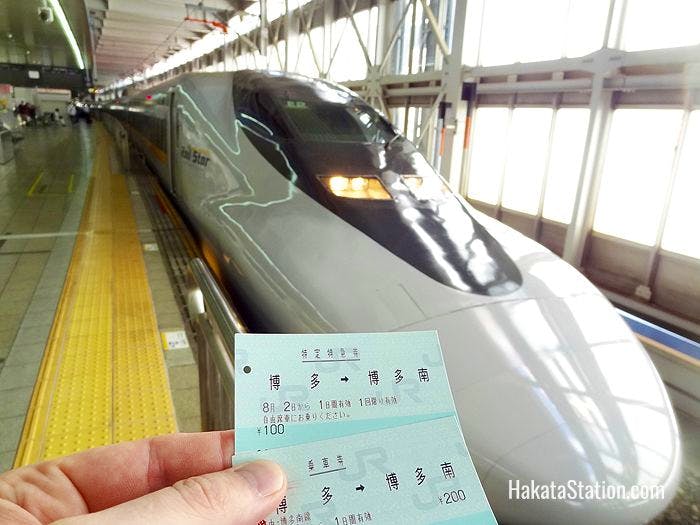
The two-station Hakata-Minami Line uses Shinkansen trains and costs 330 yen
But the bullet train is also one of the most expensive ways to get around Japan. If you don’t have a Japan Rail Pass and are sticking to a tight budget, you might never set foot in a bullet train while visiting the country.
The Hakata-Minami Line
Even a short ride on the bullet train usually costs a lot. Elsewhere in Japan, a short Shinkansen hop can cost several times more than this ride. In Fukuoka, however, a quirk of the bullet train network allows passengers to ride Shinkansen equipment on the Hakata-Minami Line for 330 yen.
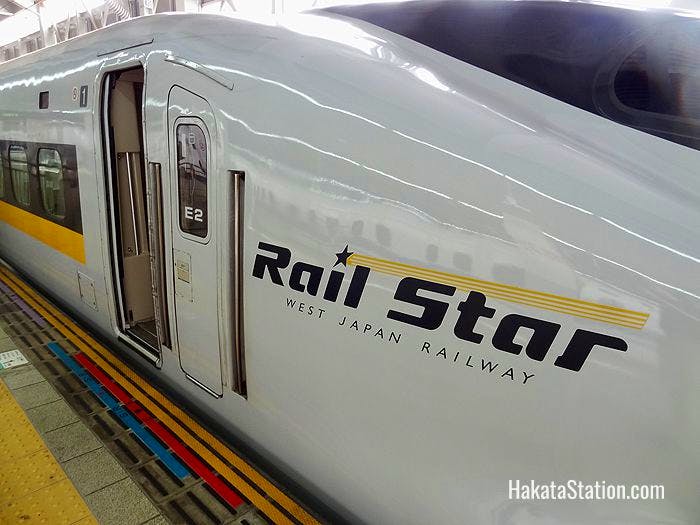
JR West Shinkansen trains on the Hakata-Minami Line have included Rail Star 700 series sets
The Hakata-Minami Line is at the southern end of the Sanyo Shinkansen network, which begins at Shin-Osaka Station. It is operated by West Japan Railway (JR West), and it uses Shinkansen trains, but it is not officially designated as a Shinkansen line. For passengers, it is treated as a limited express service between Hakata Station, the biggest rail hub in Kyushu, and Hakata-Minami Station in Kasuga City, about 8.5 km to the south by rail. There are only two stations on the line.
Hakata-Minami Station sits beside the Hakata General Rolling Stock Depot. Some trainsets use this corridor as part of their working day, but many local passengers use the short railway to commute to Hakata Station. That is why the tickets are so cheap.
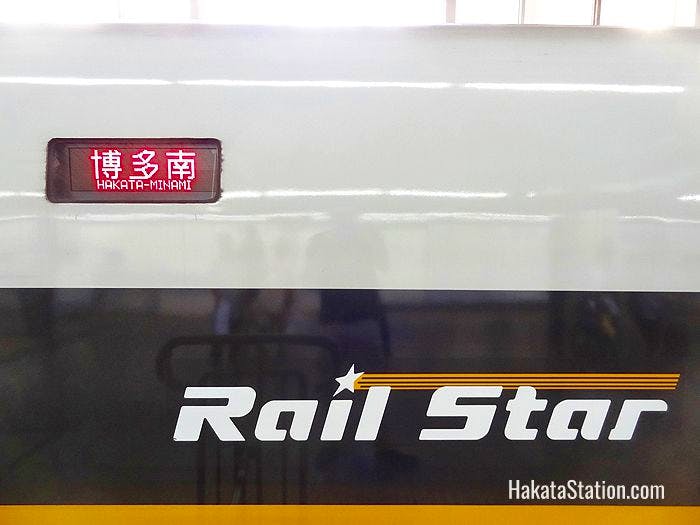
A Rail Star train bound for the Hakata-Minami depot
A bit of history explains the Hakata-Minami Line. The Sanyo Shinkansen opened in the 1970s at a time when Kasuga was more rural. As Fukuoka City grew along with its surrounding suburbs, JR West decided to use the depot access line for passenger transport too. Hakata-Minami Station opened in 1990.
The 330-yen bullet train ride
The Hakata-Minami Line appeals to train buffs because it is one of Japan’s cheapest year-round ways to ride Shinkansen equipment. There is an even shorter and cheaper seasonal Shinkansen ride on the branch line from Echigo-Yuzawa Station on the Joetsu Shinkansen to the ski resort of GALA-Yuzawa in Yuzawa, Niigata Prefecture, but that station only operates during the winter season.
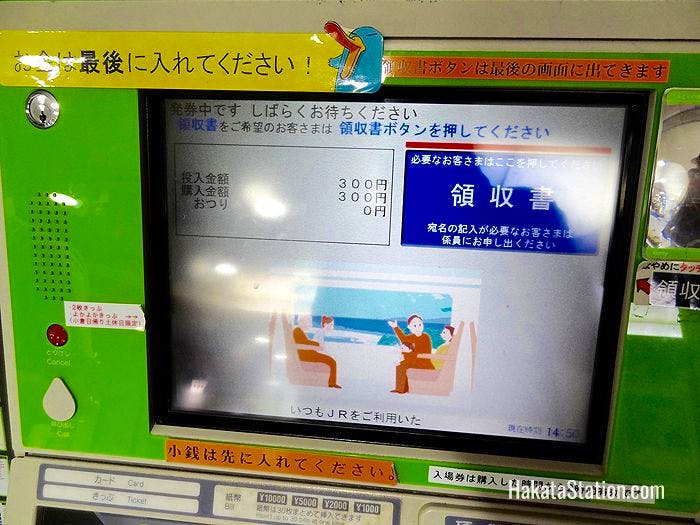
A ticket vending machine shows the fare for Hakata-Minami Station
To ride the Hakata-Minami Line, buy a ticket from the JR West Shinkansen-side ticket machines or ticket counter at Hakata Station before boarding. The current 330-yen total consists of a 200-yen ordinary fare and a 130-yen limited express charge. Do not rely on an IC card for this ride: JR West’s Hakata-Minami Station information says ICOCA is not supported at the ticket gate. Hakata-Minami Line trains use the Shinkansen side of Hakata Station, so check the current departure board for the platform.
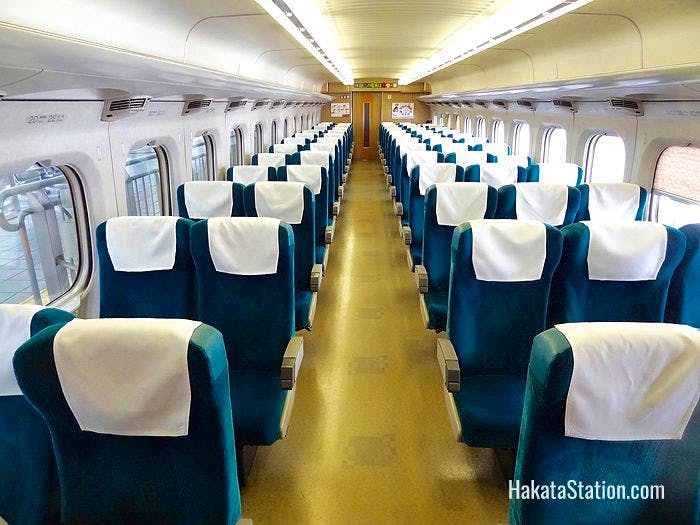
You may find yourself in an empty bullet train carriage
Outside rush hour, you may find yourself on a near-empty bullet train. Equipment varies by service and can include 500, 700 or N700 series trains. JR West has announced that regular 500 series operations will end on 13-Jan-2027, so the line has extra interest for train fans while those sets remain in use. The elevated track can provide a good view of Fukuoka during the trip. It only takes about 8 minutes to ride from Hakata Station to Hakata-Minami.
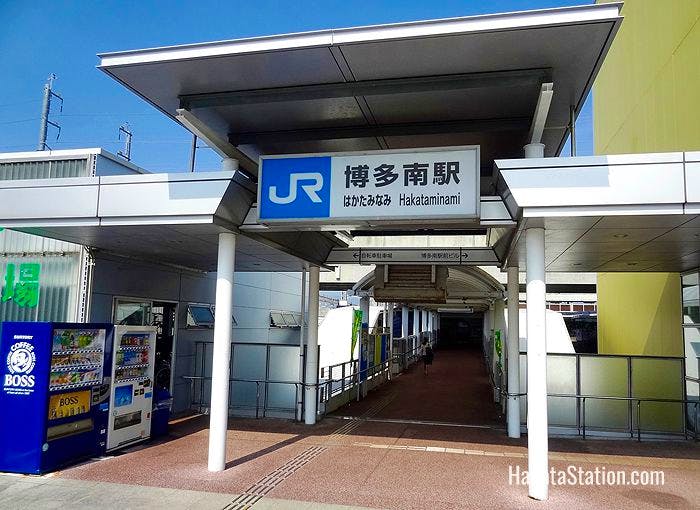
There is little to see around Hakata-Minami Station, located in a residential area about 8.5 km by rail south of Hakata Station
There isn’t a lot to see at Hakata-Minami Station apart from the depot itself. It features various Shinkansen trains, including 500, 700 and N700 series sets. There is no dedicated viewing area, but trains can be seen from the north end of the platform, and some can sometimes be seen with their nose cones open.

500 and 700 series Shinkansen trains at Hakata-Minami Station. The one at top right has its nose cone open.
On your return journey, pay attention to the platform display and the train’s destination signs. These are working Shinkansen trainsets, even though your passenger ride is the short hop back to Hakata.
Article by Tim Hornyak. All rights reserved. Last updated 24-Jul-2026.